
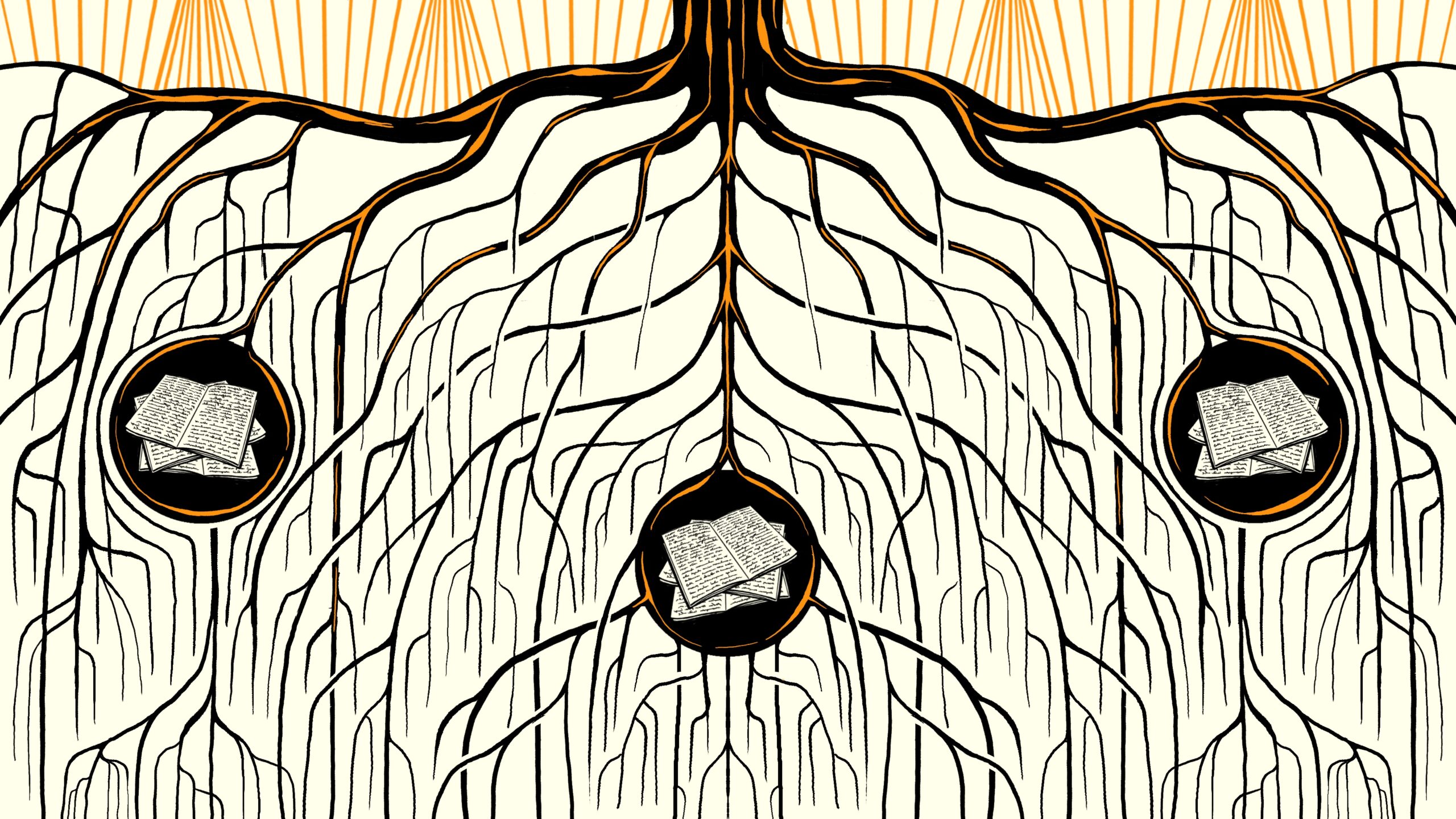
Is the Kalevala oral tradition or literature?
- The Kalevala is based on oral tradition: Lönnrot created the epic using extensive material of folk poems collected during the 19th century, mainly from Karelia.
- The Kalevala is also a literary work: Lönnrot shaped the source material into a cohesive narrative, drawing on literary influences, and created an epic that became part of 19th-century literary culture.
- The Kalevala is a hybrid: it combines a mythical worldview with modern thinking, and oral tradition with literature.
The Kalevala is oral tradition
The Kalevala is strongly rooted in oral folk poetry, which Elias Lönnrot and other folklore collectors documented during their travels in the 19th century. Lönnrot used this material when outlining the story and characters of the Kalevala. For example, poems from White Sea Karelia (Viena Karelia) about the theft of the Sampo and the ensuing battles strongly influenced the events depicted in the epic. When reading the Kalevala, it can be difficult to distinguish between Lönnrot’s written text and the original folk poems, as his writing is so skilfully done. Creating the Kalevala was, however, a demanding task. Lönnrot referred to his work on the Kalevala as “the work of Väinämöinen”, thereby emphasizing the strenuousness and difficulty of composing the epic.
Lönnrot’s goal was to create the Kalevala in a form that would be as readable and vernacular as possible. In practice, however, many readers – often swedish-speaking –found the Kalevala difficult to read and understand. Nevertheless, the work was widely acclaimed both in Finland and abroad.
The Kalevala is fiction
The Kalevala is a work of art written by Elias Lönnrot. In 19th-century Finnish-Karelian-Ingrian culture, oral poems were chanted about a wide range of heroes and events, but these folk poems did not form a coherent storyline comparable to that of the Kalevala. The epic was a highly respected literary genre in the 19th century, providing people with knowledge about their origins and identity. The epics of antiquity – the Iliad and the Odyssey – as well as epics written during the Romantic era, such as The Poems of Ossian by James MacPherson, were well known to Lönnrot. In the Kalevala, Lönnrot also drew on motifs adopted from literature. For example, in his account of Aino’s drowning, he employed the well-known literary theme of the death of a young woman.
The Kalevala is oral and literary
The Kalevala is both oral tradition and literature. It is usually described as an oral-literary epic: a mythical, vernacular, and poetic narrative edited and interpreted by a single author, Lönnrot. At the same time, it is based on folk poems and draws on literary traditions. It contains references to the pre-modern world as well as to the society and culture of Lönnrot’s own time, the 19th century. The Kalevala thus combines different worlds, cultures, and ideals and can therefore be described as a hybrid.
There are many different versions of the Kalevala
Lönnrot stated that, based on the collected folk poems, “even seven Kalevalas” could be created, and that each version would differ from the others. In fact, Lönnrot wrote five different versions of the Kalevala, three of which were published during his lifetime: the Old Kalevala (1835), the New Kalevala (1849), and the School Kalevala (1862).
Music
Mesikämmen
Composed and arranged by: trad. / Anna-Kaisa Liedes, Erja Pätsi, Alec Havinmaa Archival recording: Oudoja Issakainen, Muuanto village, 1905, SKS
Erja Pätsi, violin and speech
Anna-Kaisa Liedes, vocals and speech
Track on Vimeo