
Where can we see the influence of the Kalevala?
- The Kalevala has influenced the arts: since the 19th century, it has inspired literature, visual arts, music, as well as films and television, and it continues to inspire artists today.
- The Kalevala appears in crafts and hobbies: themes from the Kalevala are used in knitting patterns, tattoos, jewellery, and other forms of craft culture.
- The Kalevala is part of everyday life in Finland: its influence can be seen in place names, company names, given names, and even in everyday vocabulary.
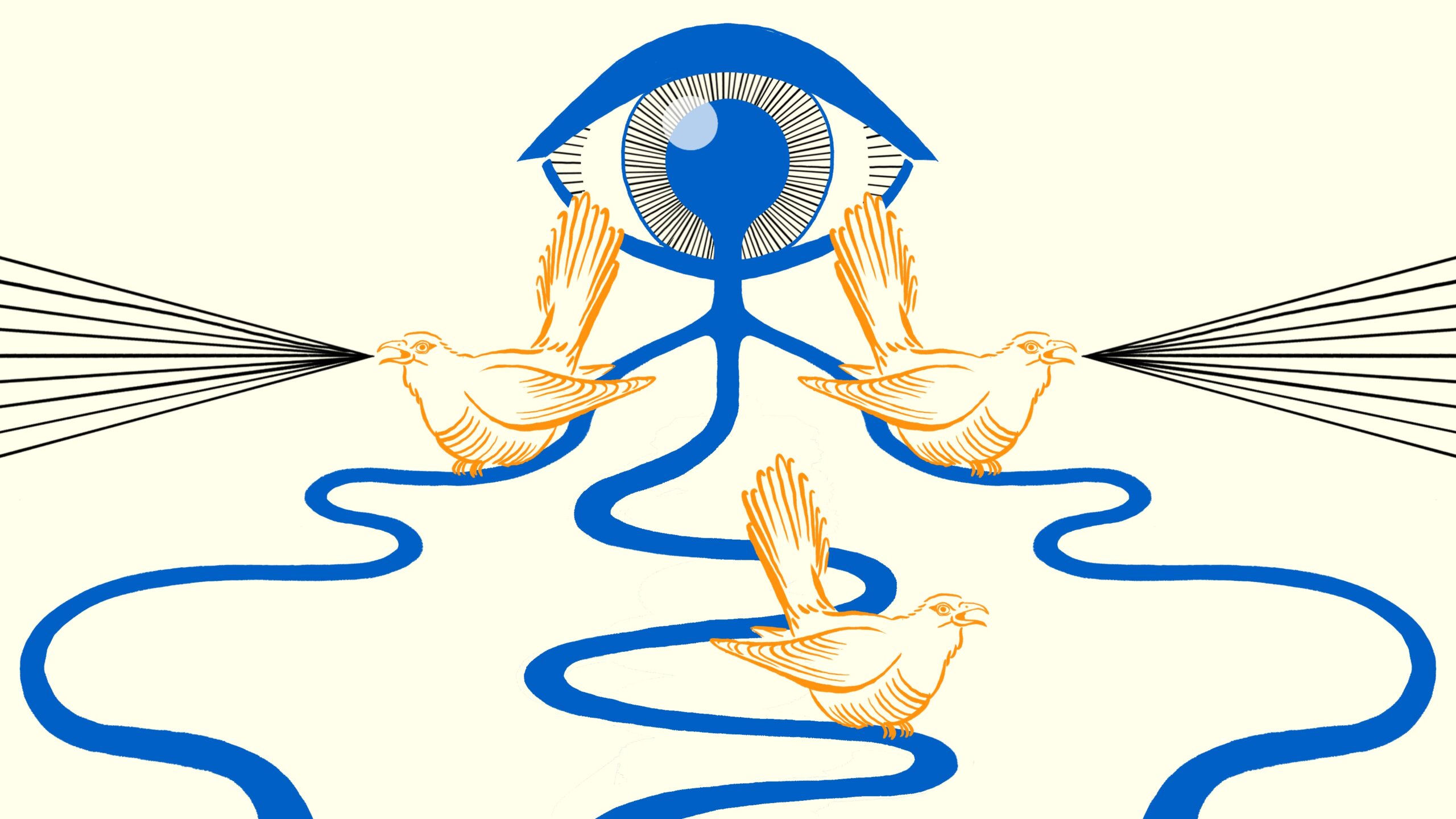
The Kalevala has inspired a remarkably wide range of artistic and cultural fields. Its influence can be seen both in classic works and in contemporary popular culture, as well as in everyday life. References to the Kalevala’s themes, characters, and language appear across a broad variety of artistic genres.
References to the Kalevala in literature
Soon after the Kalevala was published, authors began to offer their own interpretations of the epic. For example, Fredrik Cygnaeus wrote Kalevalan traagillinen aines (The Tragic Element of the Kalevala) in 1852–1853, and Aleksis Kivi wrote the play Kullervo in 1864.
Ever since the publication of the Kalevala, Finnish authors such as Eino Leino, Aino Kallas, and Paavo Haavikko have written books that refer to it, and many poets have employed the Kalevala metre. Contemporary authors have also produced adaptations and reinterpretations of the Kalevala, including Johanna Sinisalo’s Sankarit (2003), Juha Ruusuvuori’s Lemminkäisen laulu (1999), and Emmi Itäranta’s novel Lumenlaulaja (2025).
Poets such as Vilja-Tuulia Huotarinen and Johanna Venho draw on the world of the Kalevala and its source poems in their work. The Kalevala has also strongly influenced literature for young audiences, including novels by Timo Parvela and numerous comic strips. For many children in Finland, the Kalevala is first encountered through the illustrated book Koirien Kalevala by Mauri Kunnas (1989).
Art inspired by the Kalevala
The paintings of Akseli Gallen-Kallela are particularly renowned for their Kalevala-inspired themes, and it is hard to imagine the Kalevala without his visual interpretations. Gallen-Kallela worked during the period of Karelianism – the golden age of Karelian inspiration – which flourished at the turn of the 20th century. Interest in Karelia as the birthplace of the Kalevala inspired many artists and travellers to follow in Lönnrots’ footsteps and visit the same regions he had explored. The strong influence of Gallen-Kallela has, however, often overshadowed other artists, including Joseph Alanen, who died at a young age.
Kalevala-inspired paintings have typically been created mainly by male artists, including Pekka Halonen and Albert Edelfelt. Nevertheless, several female artists have also engaged with the Kalevala and produced new interpretations. Sirpa Alalääkkölä completed a work in 1988 that commented on Gallen-Kallela’s Aino triptych. Riikka Puronen’s Minä ja merenneito (1996) also refers to the Aino poem, and Stiina Saaristo’s The Last Man Standing (2009) is inspired by the Kalevala and Finnish-Karelian mythology.
Music inspired by the Kalevala
Finnish classical music has been greatly inspired by the Kalevala. The most famous composer of Kalevala-inspired music is Jean Sibelius, and other notable composers include Uuno Klami, Aulis Sallinen, Einojuhani Rautavaara, and Kaija Saariaho.
Finnish popular music has also drawn on themes from Kalevala; for example, the work of Amorphis, CMX, Ismo Alanko, and Tuomari Nurmio has been influenced by it. In folk music, artists have sought inspiration not only from the Kalevala but also from the Kanteletar and from folk tradition in a broader sense. Musician and singer Vilma Jää and kantele player Ida Elina are two female artists who have drawn on the Kalevala and folk poetry.
The Kalevala in Films and Television
The Kalevala has also inspired the storylines of films and television productions. In 1959, a Finnish-Soviet co-production titled Sampo was released. In 1982, the four-part television drama Rauta-aika, written by Paavo Haavikko, premiered. Jadesoturi (2006) was a Finnish-Chinese co-production telling the story of an ancient Chinese warrior who is portrayed as the son of the blacksmith Sampo. Jari Halonen directed the film Kalevala – Uusi aika (2013), which was also released as a four-part television series. In 2026, the film The Kalevala: The Story of Kullervo, directed by Antti J. Jokinen, was released.
The Kalevala and Artistic Crafts
Artistic crafts have become an increasingly popular hobby in recent decades, and the Kalevala and folklore have played an important role in this field. Jenna Kostet’s book of knitting patterns, Neulottu Kalevala (2022), responds to this interest.
Tattoo art has likewise been influenced by the Kalevala, its mythology, and its characters. Jewellery design has also drawn widely on the Kalevala, with the best-known example being the jewellery brand Kalevala Koru Oy.
The Kalevala in Everyday Life
The Kalevala is present in everyday life in many ways, even if it is not always immediately recognizable. Numerous street and company names are connected to the Kalevala, such as Sammonkatu (Sampo Street) in Helsinki and the Finnish insurance company Ilmarinen, named after the blacksmith of the Kalevala.
There are also places and schools named after the Kalevala. For example, the city of Espoo there has a district called Tapiola, referring to the mythical forest of the Kalevala, and in Helsinki there is a Rudolf Steiner school called the Elias school. The name Aino continues to rank among the most popular children’s names in Finland.
Music
Paimenessa (Pasturing)
Composed/arranged by: trad., Erja Pätsi, Riina Hellstén, Emmi Rajala
Erja Pätsi, violin
Riina Hellstén, cattle call and vocals
Emmi Rajala, cattle call and vocals
Anna-Kaisa Liedes, director
Track on Vimeo