
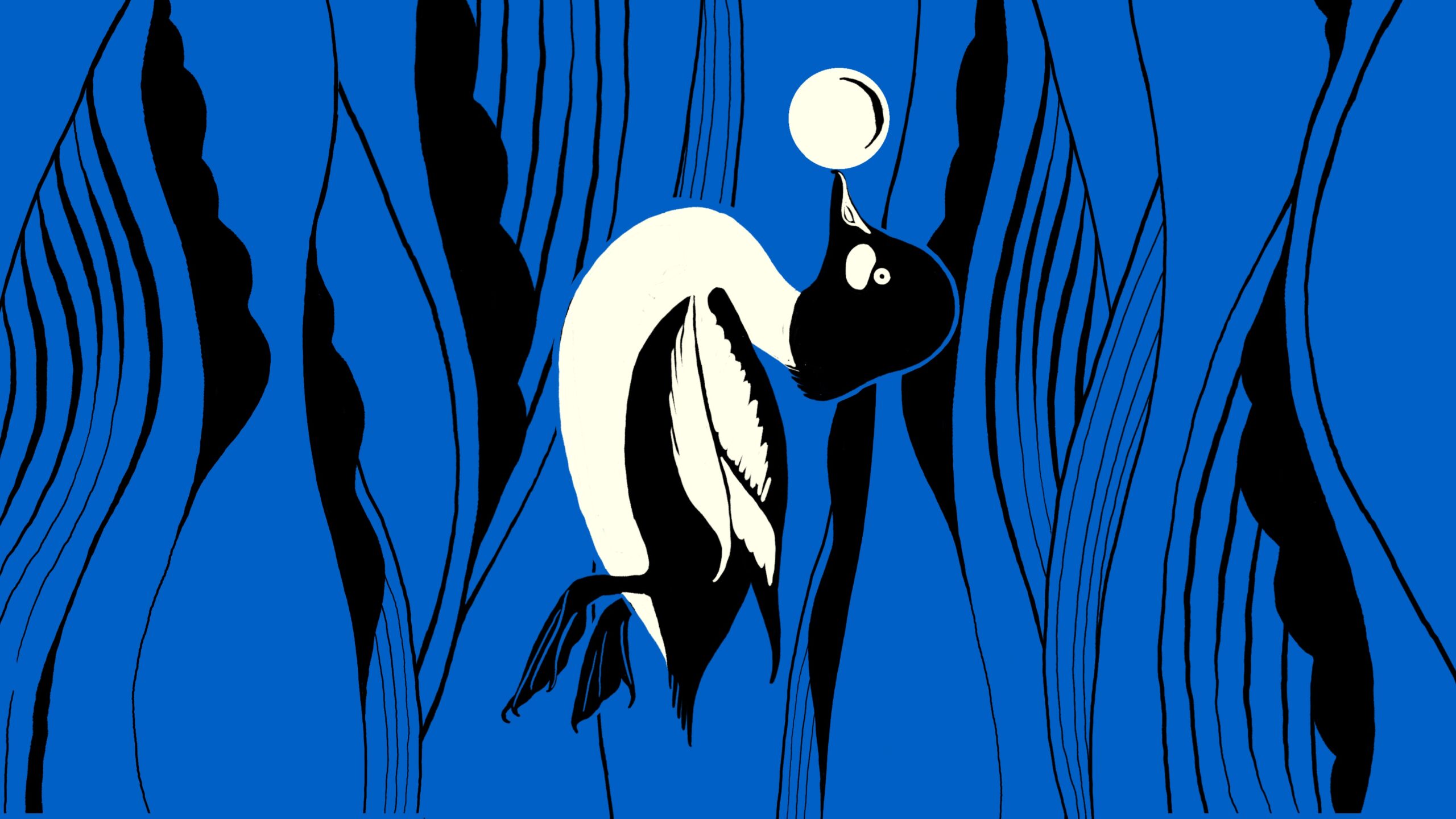
What is the Kalevala and who are its characters?
- The Kalevala is a literary work based on oral folk poetry.
- Elias Lönnrot published the first version of the Kalevala in 1835 and an expanded version in 1849, which became Finland’s national epic.
- The epic depicts a mythical world and the adventures of two groups of people.
Published in 1849, the Kalevala is the national epic of the Finnish and the Karelian people. The Kalevala is considered one of the most important works of literature in the Finnish language. It has been translated into over sixty languages, and its influence can be seen in many aspects of Finnish culture and society.
The Kalevala is not the product of a single author’s imagination. It is based on old oral poems that were passed down from one generation to the next, especially in Karelia and eastern Finland. The collection of these songs and poems began in the 19th century. It was largely the Swedish-speaking educated elite who became interested in the folklore tradition and in the origins of Finnish culture.
Elias Lönnrot, a medical doctor, linguist, and folklore collector, compiled a wide range of oral poems into a coherent epic. He travelled from village to village, recorded oral verses, and combined and edited them into a grand tale. The first version of the Kalevala was published in 1835, and a more comprehensive edition appeared in 1849. The longer and more extensive version, “the New Kalevala”, is now considered Finland’s national epic.
The stories in the Kalevala take place in a mythic age before the arrival of Christianity. The epic tells of heroes such as the sage Väinämöinen (tietäjä in Finnish; a seer or wise man, literally “one who knows”) as well as the blacksmith Ilmarinen and the young Lemminkäinen. They experience adventure and love, and they are capable of magic. Their world is filled with incantations, magical artifacts, and battles between good and evil. Yet the poems also portray everyday life of people: their longing, disappointments, and death. Lönnrot also created strong female characters for the Kalevala, such as Louhi, the Mistress of Pohjola, Lemminkäinen’s mother, and the young woman Aino.
The Kalevala brings together ancient myth and oral tradition with the literary culture and intellectual climate of the 19th century. Its myths and characters speak both of the past and of the period when Finnish culture sought its own voice among the nations of Europe.
Folk poetry and oral tradition
The oral folk poems on which the Kalevala is based belong to a broad tradition of oral singing. These folk poems were originally passed down by singing, but in the 19th century members of the educated elite began to record them. In this way, an oral tradition gradually became a written one as well. The poems were performed in village communities by singers – often respected storytellers and performers – who knew songs of thousands of lines by heart and could adapt them to different situations and audiences.
The tradition of documentation, publication, and study of oral poetry became an important part of Finland’s national awakening in the 19th century. Through this work, folk poetry was shaped into a written epic – and the Kalevala was born.
The characters of the Kalevala
Aino is a young maiden who refuses to marry the old Väinämöinen. Her brother, Joukahainen, loses a singing contest to Väinämöinen and promises to give his sister to him in marriage. Aino rejects the match and chooses to drown herself. Later she is transformed into a fish: she appears on Väinämöinen’s fishing rod and mocks him. The story of Aino draws on a poem from White Sea Karelian (Viena Karelia) about a maiden who hangs herself. Aino’s poem is a lyrical tragedy that has inspired many artists. Alongside Kullervo, Aino is one of the characters in the Kalevala most strongly shaped by Lönnrot himself.
Antero Vipunen is a long-dead giant and sage. Väinämöinen must obtain magic words from him in order to finish building his boat. Vipunen accidentally swallows Väinämöinen, and Väinämöinen finds himself inside the giant’s belly. Vipunen chants a long incantation to drive the intruder away from his stomach. The incantation works, Väinämöinen is freed from Vipunen’s stomach and he finally gains the words he needs to complete his boat.
Ilmarinen, also known as Ilmari, the blacksmith and “the everlasting craftsman”, is one of the male heroes of the Kalevala. An engineer of his time, Ilmarinen forges the Sampo, a wondrous mill that grinds good fortune, as well as the golden bride. He also masters iron, joins Väinämöinen and Lemminkäinen on the expedition to steal the Sampo, and frees the heavenly bodies from the mountain of Pohjola. Ilmarinen marries the Maiden of Pohjola, but later loses his wife as a result of Kullervo’s revenge. He appears in more than half of the epic’s fifty poems.
Joukahainen is a young man who challenges the old Väinämöinen to a singing contest. His wisdom and singing are no match for Väinämöinen, and after his defeat he promises his sister in marriage to Väinämöinen. Later, Joukahainen shoots Väinämöinen into the sea, but Väinämöinen is rescued.
Kalevala and Pohjola are the epic’s two main settings. They are imaginary lands shaped by Lönnrot, although over time there have been attempts to identify them with real places on the map. The story of the Kalevala revolves around the relationships and conflicts between the communities of Kalevala and Pohjola. This opposition was based on the Homeric epics of ancient Greece – especially the Iliad, which centres on the war between the Greeks and the Trojans. In Kalevala, power lies largely with male heroes, whereas Pohjola is ruled by Louhi, the Mistress of Pohjola. The Kalevala has often been interpreted as the tale of a band of heroes from Kalevala who confront the powerful forces of Pohjola and struggle for their survival.
The Kantele is a musical instrument and a central symbol in the Kalevala. Väinämöinen makes the first kantele from the jawbone of a giant pike, and when it is lost in the sea, he fashions a new one from a birch tree. When Väinämöinen plays the kantele, humans and animals alike are enchanted and deeply moved. At the close of the epic, Väinämöinen leaves the kantele behind, thus foretelling his return. Because of its important role in the Kalevala, the kantele came to be regarded as Finland’s national instrument in the 19th century.
Kullervo is the mistreated son of Kalervo, who survives his uncle Untamo’s attempts to kill him. Restless and troubled, he is eventually sold as a slave to Ilmarinen. Ilmarinen’s wife sends Kullervo to herd her cattle and gives him a loaf of bread with a stone baked inside. When he cuts the bread, the knife given to him by his father breaks in two. In fury, Kullervo summons bears and wolves from the forest to attack Ilmarinen’s wife. Later, Kullervo meets his sister without recognizing her. They spend the night together, and when the incestuous relationship is revealed, she drowns herself. Kullervo then sets out to Untamola once more to take revenge for the cruelty he has endured and destroys the people of Untamola. In the end, he takes his own life. The Kullervo cycle draws on several Karelian and Ingrian folk poems, but the story as a whole was strongly shaped by Lönnrot. It has often been read as a didactic poem about the devastating consequences of cruelty and neglect in childhood.
Lemminkäinen – also known as Kaukomieli and Ahti Saarelainen in the Kalevala – is an adventurer known for his romantic exploits and misfortunes. He carries off Kyllikki as his wife, but later abandons her. He then seeks to woo the Maiden of Pohjola, famed for her beauty, and must perform a series of feats set by Louhi: he catches the elk of Hiisi, harnesses the fierce gelding, and attempts to shoot the swan of Tuonela. This is nearly his end. He is cast into the River of Tuonela and drowns, but his mother rescues him and brings him back to life. Later, Lemminkäinen joins Väinämöinen and Ilmarinen on the expedition to steal the Sampo.
Lemminkäinen’s mother is a sage and healer, who embodies the power of maternal love. She advises and helps her son Lemminkäinen and restores him to life at the River of Tuonela.
Louhi, the mistress of Pohjola, is one of the Kalevala’s female heroes. A formidable sage and the ruler of Pohjola, she has beautiful daughters whom the male heroes pursue. Louhi repeatedly opposes the men of the land of Kalevala and battles them for control of the Sampo, the mill that grinds good fortune.
Sampo is a magical object forged by the blacksmith Ilmarinen. It can bring riches, good fortune, and whatever a person might need. Ilmarinen makes it as a gift for Louhi, the Mistress of Pohjola, hoping to win the hand of her daughter. However, Väinämöinen also wants to share in the Sampo’s prosperity, and he sets out with Ilmarinen and Lemminkäinen to steal it from Pohjola. In the ensuing battle with Louhi, the Sampo falls into the sea and shatters. Although the magic device Sampo is one of the Kalevala’s most important symbols, it remains an enigmatic object, and it has been explained in many different ways. It has been interpreted, for example, as the sun, a mill, or a boat. It has also been seen as representing cultural and economic development – such as the rise of agriculture.
In the Kalevala, Tuonela is the land of the dead, far away from the world of the living. To reach it, one must cross the river of Tuonela. Tuonen tytti, (‘Tuoni’s girl) guards the crossing so that no living being can pass to the other side. The heroes of the Kalevala visit Tuonela twice. Lemminkäinen dies at the River of Tuonela when he attempts to shoot the Swan of Tuonela, but his mother brings him back to life. Väinämöinen, for his part, enters Tuonela in search of the magic words needed to build his boat. He fails to find them and is nearly trapped in the land of the dead, but escapes at the last moment.
Väinämöinen, Väinö, is the principal hero of the Kalevala – a mighty sage and singer. He is described as “steady old”, “wise” and “the eternal sage”. At the beginning of the epic, Väinämöinen takes part in the creation of the world. Later, he becomes a chief adversary of Louhi, the Mistress of Pohjola, and an ill-fated suitor of young women. The Kalevala ends with Väinämöinen’s departure and the beginning of a new age.
Music details
Aino
Text: Kalevala
Melody sung by Anna Kivisoo (b. 1881, Ingria, village of Ropsu)
Choir: Sibelius Academy Folk Song Ensemble and Erja Pätsi
Violin: Erja Pätsi (music arrangement)
Singers: Pekka Aalto, Wille Enckel, Anna-Maija Kujanpää, Anna-Kaisa Liedes (music arrangement and direction), Kiira Parikka, Heta Saarenkunnas, Helena Taskila